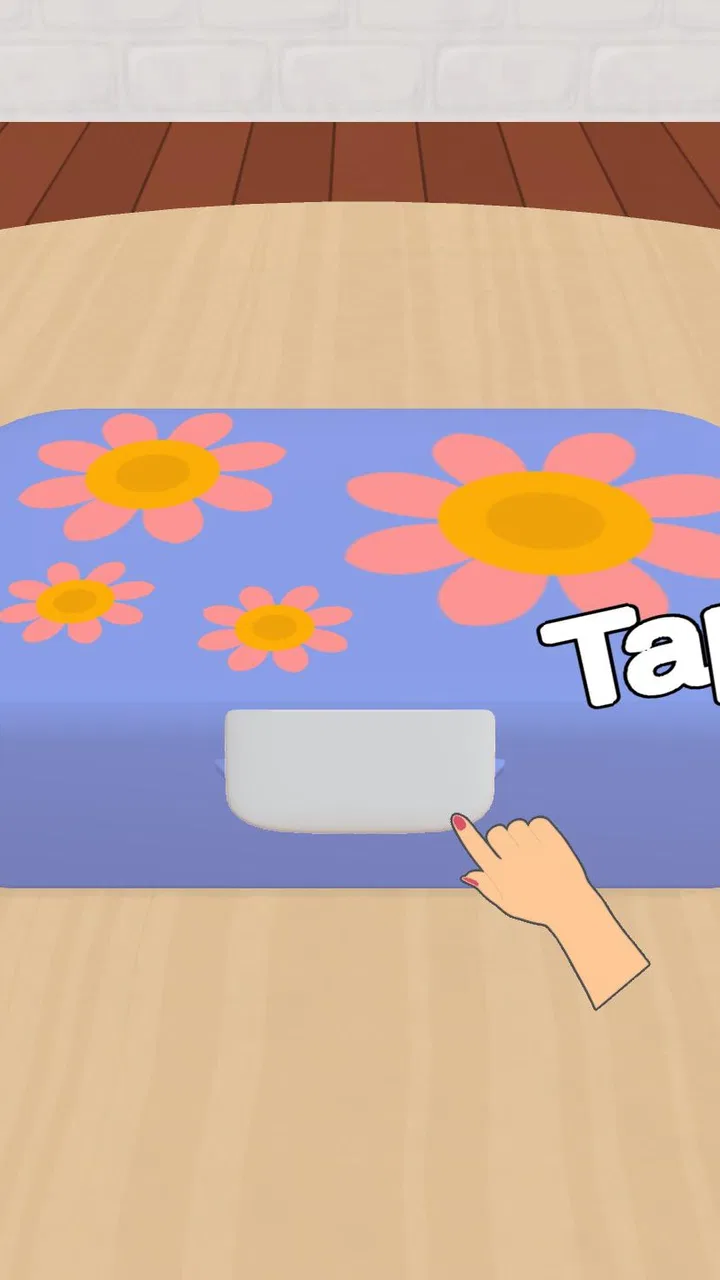
Lunch Box Ready
- 4.4
- Rating
- 10.00M
- Installs
- Free
- Price

 Analysis by App-foxy
I approached Lunch Box Ready as a small, casual simulation game rather than as a serious cooking tool. Its central idea is easy to understand: prepare a lunchbox by arranging food from the fridge, then complete the meal with a dessert-style do-it-yourself touch. That simple setup makes it immediately approachable, especially when I want something light that can be played in short bursts without learning a complicated system first.
The game is free to play and comes from CrazyLabs LTD, a developer with a large collection of accessible mobile games. It sits in the simulation category, although its focus is much closer to playful organizing and food preparation than to a detailed restaurant-management simulator. That distinction matters. If you expect menus, staff, budgets, or a long-term business to manage, this is not really that kind of experience. If you enjoy making a messy space look orderly and finishing a visually satisfying meal, it makes more sense.
It has built a broad audience, with an average rating of 4.4 from around 200 thousand ratings and more than 10 million installs. I see those figures as a sign that the basic loop is easy for many people to pick up, not as proof that every player will enjoy it equally. The Teen content rating is also worth noticing before handing the game to a younger child, even though the presentation itself is colorful and uncomplicated.
You May Also Like

 Blood Strike: 2.5 Anniversary
Blood Strike’s Loadouts Turn Every Drop Into a Tactical Gamble
A close look at Blood Strike’s custom loadouts: how fast access to signature weapons reshapes its battle royale rhythm, rewards preparation, and narrows the gap between fights.

 Pandora - Music & Podcasts
Pandora’s Music Is Easy to Start, but Harder to Recover
Pandora’s strength is its low-effort path from a seed to a station. Its weak spot is how much confidence it asks you to place in connection, setup, and quiet recovery.

 8 Ball Pool
 Is Built on Rivalries, Rematches, and Routine
A close look at the rivalries, rematches, shared routines, and unanswered safety questions that turn a quick pool match into a persistent mobile community.

 Samsung Music
’s Quiet Strength Is Playing What You Already Own
Its reach comes less from spectacle than from dependable access to a personal library. That simplicity is both the app’s strongest retention engine and its ceiling.

 AccuWeather: Weather Radar
AccuWeather Review: A Quick, Clear Forecast for Everyday Decisions
For everyday plans, the best forecast is the one you can understand quickly. AccuWeather makes rain timing, radar, and local conditions easy to act on, with a few trade-offs.

 Hill Climb Racing
Why Hill Climb Racing Still Turns Crashes Into One More Run
A tiny car, a bumpy hill and one more upgrade: Hill Climb Racing keeps resurfacing because its simple chaos makes every near-miss feel personal.
More From Our News Desk



What to judge before downloading
The first question I would ask is whether you enjoy short organizing games more than games built around progression. Lunch Box Ready is best judged by the quality of its small interactions: selecting food, fitting items into a lunchbox, and making the final result feel complete. It is not trying to replace a full cooking game or become a deep simulation. The pleasure comes from the immediate task in front of you.
I also paid attention to how much patience the game demands. A good casual title should let me understand the objective quickly, and this one benefits from that direct approach. The fridge-to-lunchbox theme gives every action a clear context. I am not moving abstract colored pieces around; I am preparing something that looks like a meal. That makes the activity more relatable than many generic sorting games.
Another decision point is your tolerance for repetition. The basic fantasy stays consistent: organize food, prepare the lunchbox, and finish with dessert. That consistency is part of the appeal when I want a familiar routine, but it can also become the main limitation for players who need constant novelty. I would not choose it as my primary game if I wanted a large map, a story, competitive play, or a complex collection system.
The current version is 1.8.3.6, and the game supports devices running Android 7.0 or later. That makes it a practical option for people using older compatible phones rather than only recent hardware. Still, compatibility alone does not decide whether it is a good download. The more important question is whether the organizing theme matches the way you like to relax.
The first few sessions
My first impression is shaped by how quickly the concept communicates itself. The lunchbox provides a natural destination for the items, while the fridge gives the activity a starting point. I do not need to imagine an elaborate backstory to understand what I am doing. That is useful when I have only a few minutes and do not want to read instructions or watch a long introduction.
The visual goal is also easy to recognize. A completed lunchbox feels more satisfying when the contents appear deliberately arranged instead of randomly dropped inside. This is a small but important difference from many tap-based casual games: the result has a visible sense of order. I found that I naturally started thinking about space and placement, even though I was not managing a real kitchen.
For an everyday scenario, I can see myself opening it during a short break while waiting for an appointment. I would not need to remember a complicated storyline or rebuild a large strategy. I could complete a simple food-preparation task, enjoy the finished arrangement, and stop without feeling that I had abandoned a long session. That makes it more suitable for fragmented free time than for an evening dedicated to gaming.
Where the food-and-order theme wins
The strongest part of the experience is the combination of a familiar subject and a clear physical objective. Many simulation games ask me to operate systems, but this one asks me to make a contained object feel ready. The lunchbox acts as both the workspace and the reward. I can see what I am trying to accomplish, and the dessert element gives the final stage a little more personality than simple storage.
That design is especially effective for players who like tidying, arranging, and visual completion. I enjoy games where the before-and-after difference is obvious, and this one creates that contrast without requiring a large environment. The fridge suggests preparation, the lunchbox suggests organization, and the finished meal gives the task a recognizable endpoint.
The best reason to play is the satisfying transition from scattered ingredients to a ready-to-go meal. That is more specific than saying the game is relaxing. The relaxation comes from having a narrow problem with a visible solution. I am not balancing several demands at once; I am concentrating on making one small arrangement work.
The theme also gives the game a broader appeal than a purely abstract sorting exercise. Someone who normally ignores puzzle-like organization games may still understand the appeal of preparing lunch. Likewise, a player who enjoys cooking games but does not want recipes, timers, or restaurant pressure may appreciate this lighter interpretation.
Small habits that improve the experience
I found it more enjoyable to treat each lunchbox as a layout problem rather than rushing to place the first item I noticed. Looking at the available space before committing to an arrangement helps reduce the feeling of randomly testing positions. Even when the game is forgiving, planning the larger pieces first is a useful habit because it leaves room for smaller food items and the finishing dessert step.
A second useful approach is to avoid judging the experience only by speed. The theme works because the final box looks prepared, not because I completed it in the shortest possible time. Slowing down slightly makes the organizing aspect more noticeable. This is one of those games where the player can create part of the enjoyment through the way they approach the task.
I also recommend using it as a short reset rather than expecting it to fill a long gaming session. When I played with that expectation, the repeated structure felt more comfortable. I could finish a task and put the phone away. When I expected a deep simulation with steadily expanding responsibilities, the simplicity became more apparent and the game felt less substantial.
Where other types of games may fit better
Lunch Box Ready is not the right choice for every simulation fan. Players who want a realistic kitchen workflow may prefer a cooking game with recipes, ingredient combinations, timing, and more detailed preparation. Those alternatives usually offer more decisions per session, while this game concentrates on arranging and completing the lunchbox. The trade-off is easy to understand: this title is quicker to enter, but a deeper cooking simulator can provide more variety.
Players who enjoy management may also be better served elsewhere. A restaurant or shop simulation typically gives me long-term goals, upgrades, customer demands, and resource choices. Lunch Box Ready does not appeal for those reasons. Its focus is the individual meal, so it is a weaker fit if I want to build something over many sessions or feel that my decisions are changing a larger operation.
There is another alternative category worth considering: pure sorting and organizing games. These may provide more objects, rooms, or detailed spaces to arrange. Lunch Box Ready wins when the food theme makes the task feel personal and recognizable, but a broader organizing game may offer more variety if I quickly exhaust the lunchbox format.
It is also less suitable for players looking for social competition. The appeal here is personal completion, not comparing a score with friends or coordinating a shared activity. If your motivation comes from rankings, multiplayer teamwork, or direct competition, the central design may feel too private and self-contained.
The Teen rating should influence family decisions as well. I would not assume that a cheerful food theme automatically makes it appropriate for every child. Parents should check the rating for their own household and decide whether the game fits the intended player. The presentation may look accessible, but the official age guidance is still part of the download decision.
Friction that affects the recommendation
The biggest limitation is the narrowness of the core activity. Once I understand that the game is about organizing food into a lunchbox and adding a dessert-oriented finish, there is not much mystery left. That can be exactly what I want during a brief break, but it means the game may lose its pull faster than a simulation with several connected systems.
The free price lowers the barrier to trying it, but free mobile games can still involve interruptions or design choices that affect the rhythm of play. I would approach it as a casual download rather than assuming that free means frictionless. If you are sensitive to interruptions, prefer uninterrupted premium games, or dislike being guided toward optional actions, that should be part of your decision before making it a regular habit.
Another limitation is that the game’s satisfaction depends heavily on presentation and touch interaction. If the placement feels imprecise on your particular device, the organizing fantasy becomes less enjoyable because the task starts to feel like wrestling with controls. I would give it a short trial rather than committing to it as a main game. The concept is simple enough that you will know quickly whether the interaction feels natural.
There is also a difference between relaxing repetition and empty repetition. For me, the game works when I want a predictable activity with a clear finish. If I am already bored by similar food-arranging games, the lunchbox theme alone may not be enough to change my mind. That is a genuine reason to skip it, not a flaw that every player needs to overlook.
What switching from another casual game involves
The cost of switching is low if you are coming from another short-session game. You do not need to learn a large set of rules or understand a complicated economy before the theme makes sense. The mental adjustment is mainly recognizing that the reward is visual order rather than a high score, a new character, or a large upgrade.
Switching is more significant if you normally play detailed simulation games. In that case, you may miss the feeling of managing several connected variables. Lunch Box Ready removes much of that overhead, which is why it can feel refreshingly simple at first. The same simplicity can later feel limiting if you want meaningful long-term planning.
For someone replacing a general sorting game, the change is mostly thematic. You are still looking for a satisfying arrangement, but the lunchbox gives the task a specific everyday purpose. That can make the experience more inviting, especially if you like food presentation or the idea of preparing something neatly for later.
I would not delete a deeper cooking or management game solely to install this one. I would use it beside that kind of title, assigning each a different role. A detailed simulator is better when I want a substantial session; this game is better when I want a contained task that can end naturally. That division prevents disappointment and makes its simplicity feel intentional.
Who should try it
I recommend it to players who enjoy casual simulation with a strong organizing element. It is a good match for anyone who finds satisfaction in fitting items into limited space, making a meal look ready, and completing a small visual transformation. It also suits people who prefer games that explain themselves through their setting instead of through extensive tutorials.
It can be particularly appealing if you want something more purposeful than an abstract sorting game but less demanding than a cooking or restaurant simulator. The fridge, lunchbox, and dessert theme create a friendly sequence that is easy to understand. I would also consider it for a secondary game on a phone used during commutes, waiting periods, or short breaks.
I would skip it if your ideal simulation involves realistic procedures, deep customization, business decisions, or a strong narrative. I would also skip it if repetitive organizing tasks already feel like work rather than relaxation. In those cases, a more strategic simulation, a fuller cooking game, or a story-driven alternative would probably give you more lasting value.
My recommendation after using it
My overall view is positive but deliberately limited. Lunch Box Ready succeeds because it knows how to make one small idea understandable: take food from the fridge, arrange it into a lunchbox, and finish the meal with a dessert-style activity. It does not need a complicated premise to be pleasant, and its free entry point makes experimentation easy.
At the same time, I would not describe it as a deep simulation. Its value is in quick, visually clear sessions, not in a growing world or demanding management. The game is strongest when I treat it as a relaxing organizing break and weakest when I ask it to provide the depth of a full cooking or business simulator.
CrazyLabs LTD has shaped this into a focused casual experience, and the large audience around it suggests that the format connects with many mobile players. The current release, 1.8.3.6, is worth trying on a compatible Android device if you want this particular style of food preparation. Just keep the Teen rating in mind and approach the download with the right expectations.
My clear recommendation: try it if a neat lunchbox, short tasks, and simple food organization sound satisfying. Keep it as a lightweight companion rather than your only simulation game. If you want depth, long-term progression, or realistic cooking decisions, choose another category instead; if you want a quick, cheerful way to turn a scattered meal into an orderly one, Lunch Box Ready is an easy game to sample.
FAQs for Lunch Box Ready
01What is the primary objective of Lunch Box Ready?
Lunch Box Ready is a fun and engaging mobile game where the main objective is to prepare the perfect lunch box. Players must choose from a variety of foods and arrange them neatly to satisfy specific requirements and challenges. The game combines creativity with strategic thinking, making it suitable for all ages.
02Is Lunch Box Ready suitable for children?
Yes, Lunch Box Ready is designed to be family-friendly and is suitable for children. The game features colorful graphics and simple controls that make it easy for younger players to understand. While it offers a fun challenge, parental guidance is recommended to ensure kids are engaging appropriately.
03Does Lunch Box Ready require an internet connection to play?
Lunch Box Ready can be played both online and offline, allowing users to enjoy the game without an internet connection. However, some features, such as leaderboard access and in-app purchases, may require connectivity. This makes it a versatile choice for gaming on the go.
04Are there in-app purchases in Lunch Box Ready?
Yes, Lunch Box Ready offers in-app purchases that allow players to enhance their gaming experience. These may include additional levels, special food items, or cosmetic upgrades. While these purchases can enhance gameplay, they are optional and not necessary to enjoy the full game.
05What devices are compatible with Lunch Box Ready?
Lunch Box Ready is available on both Android and iOS platforms. It supports a wide range of devices, ensuring compatibility with most smartphones and tablets. To ensure the best performance, it is recommended to play on devices with the latest operating systems and sufficient storage space.
Pros
- Vibrant graphics enhance the user experience.
- Intuitive controls make gameplay easy to learn.
- Variety of levels keeps the game engaging.
- Frequent updates add new challenges.
- Offline mode available for uninterrupted play.
Cons
- In-app purchases can be expensive.
- Advertisements appear frequently.
- Limited customization for characters.
- Some levels can be repetitive.
- Requires substantial storage space.

Lunch Box Ready
Gallery